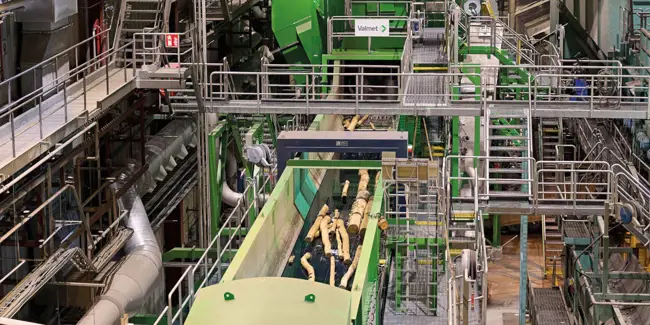
All for the chip – Valmet’s lifecycle commitment improves efficiency and chip quality at pulp mills
Chip quality has a direct influence on pulping efficiency, yield and raw material costs. While mills cannot control every aspect of raw material variation, they can significantly improve chip uniformity and process stability by focusing on the equipment lifecycle – from original design and modernization to maintenance, process monitoring and long‑term development.
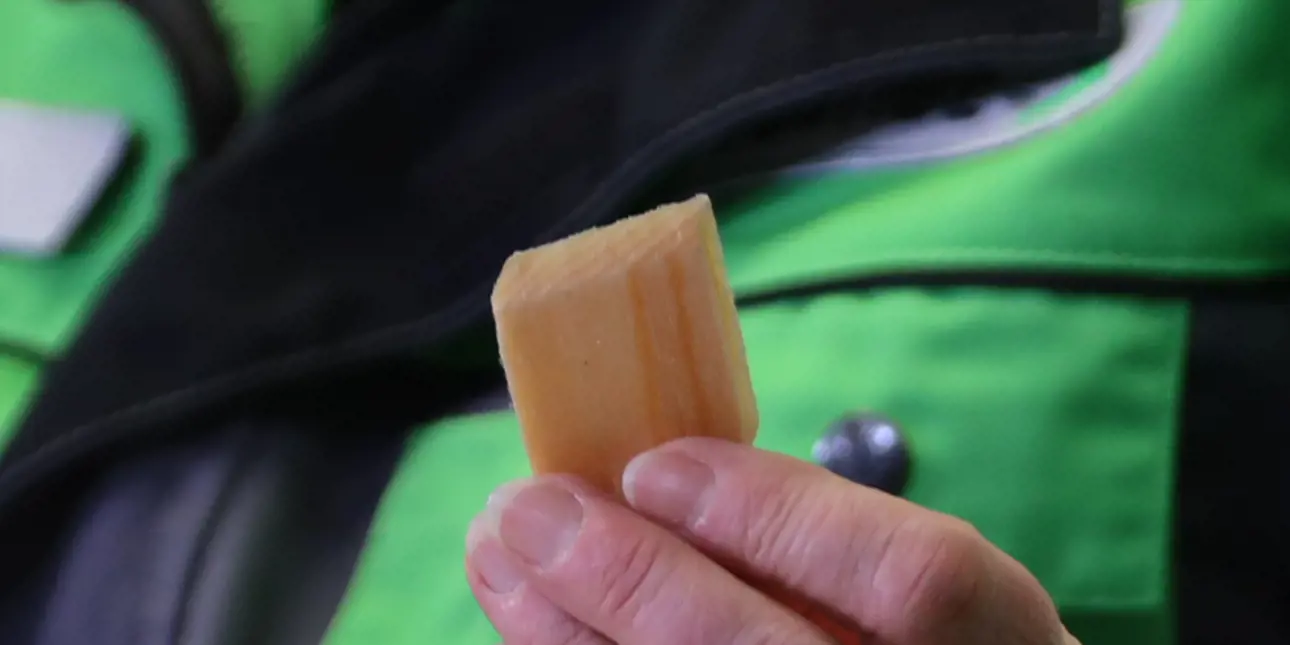
Wood chips are produced through a series of processes that transform logs into uniform particles ready for cooking. The process spans raw material handling and storage, debarking, chipping, screening, and removal of fines and oversize before the chips enter the pulping line.
“Despite the multiple steps and equipment needed in the process, chipper is by far the most important: infeed geometry, knife angles, number of knives, and chipping speed all have a major impact on chip quality. And since every part of the chipper is a wearing element, keeping the equipment in good condition is essential for producing uniform, high-quality chips,” says Timo Vastamaa, Senior Engineer, Chipping, at Valmet.

Timo Vastamaa, Senior Engineer for Chipping
The chipper is by far the most important part of the process. Infeed geometry, knife angles, number of knives, and chipping speed all have a major impact on chip quality.
Proven technology: Valmet Disc Chipper
Valmet has over 200 years of combined experience covering Carthage, Camura, Murray, Rauma, and Demuth chippers, and has delivered more than 2 200 heavy-duty chippers around the world. Today, Valmet’s chipper offering includes disc chippers, compact chippers, and drum chippers – always tailored to customer process and raw material.
“Valmet Disc Chippers are the most durable disc chippers in the world, and they offer reliable and stable performance even in the toughest conditions. Their optimal chipping geometry ensures superior chip quality with uniform chips, and their smooth log infeed, widest infeed spout and high number of knives maximize output,” Timo Vastamaa says.
Valmet continuously develops products and services to meet the evolving needs of its customers worldwide. For example, Valmet Chipper Thrust Bearing was developed to ensure constant, minimal knife clearance, which is a major factor in reducing oversized chips as well as fines and pins, thus improving chip quality immediately.
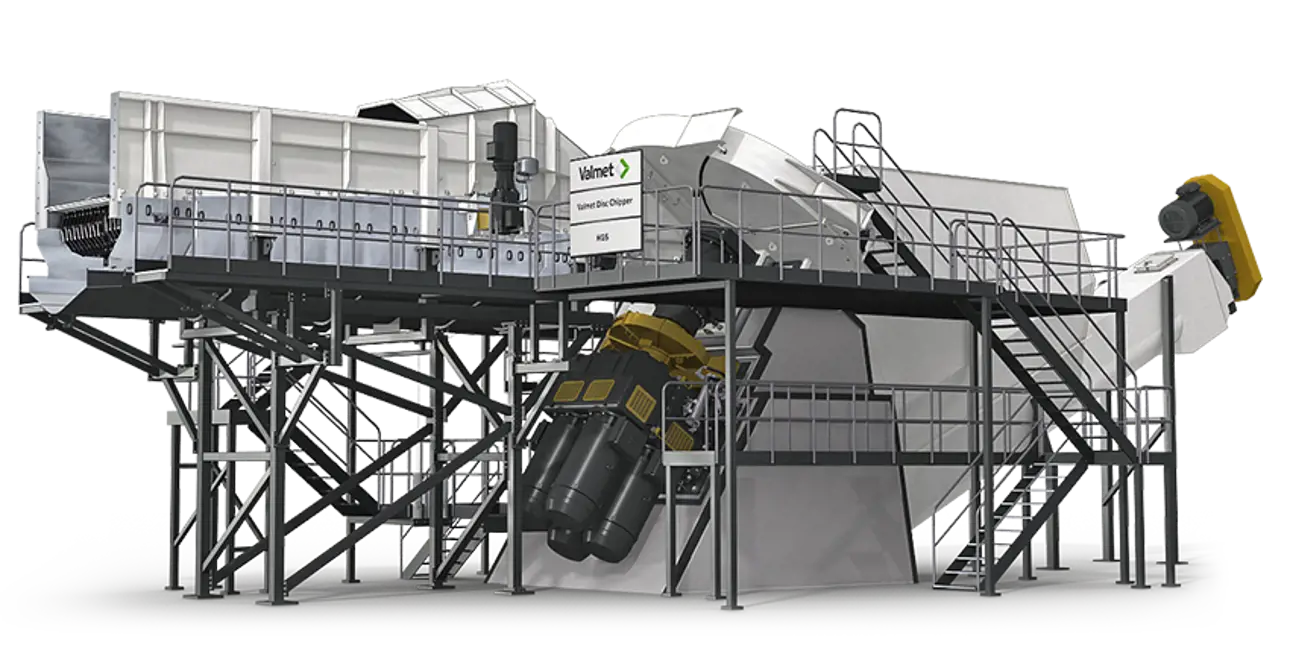
Valmet Disc Chippers are designed for stable performance and superior chip quality.
Changing raw material puts new demands on equipment
Mills everywhere face similar trends: smaller log diameters, fluctuating wood availability, and rising raw material costs. These trends increase the need for stable chip quality and hence highlight the importance of up-to-date equipment.
Valmet’s wood-processing portfolio includes solutions that help mills adapt to changing raw material and production conditions while extending the lifecycle of their existing chippers.
“With a tailored upgrade, mills can improve chip quality and production efficiency. The preferred results can be achieved, for example, with new disc designs featuring more knives, improved bearing arrangements, auxiliary equipment such as chip post-processors, and upgraded wear components,” says Milton Scherer, Engineering Manager, Woodhandling, at Valmet.

Milton Scherer, Engineering Manager for Woodhandling
With a tailored upgrade, mills can improve chip quality and production efficiency.
Most solutions can be installed on existing chippers without major rebuilds and help pulp mills adjust to raw material variations. For example, the patented Valmet Chipping Speed Control is designed to control the chipper knife disc rotation speed, helping to stabilize chip length. It compensates for seasonal variation in raw materials such as dry or frozen wood.
Lifecycle commitment to improving chip quality
Currently, Valmet has a global installed base of more than 300 chippers and the know-how to service also competitor equipment at pulp mills around the world.
"Thanks to our long experience, we know chippers by heart and can offer services and technology updates that best fit the customer’s needs – regardless of the brand or the age of their chipper,” Milton Scherer says.
Valmet’s lifecycle commitment aims to keep the equipment in optimal operating condition throughout its entire lifetime. Regular knife changes, grinding, wear plate replacement, and alignment checks are essential to extend equipment life and stabilize chip quality.
Scherer highlights the importance of wear components: “When the spout wears too much, the infeed geometry is no longer correct. That alone can reduce chip quality significantly. Knife clearance is another critical parameter. If the gap between the knife and bedknife becomes too large or inconsistent, fines and pin chips increase rapidly,” he clarifies.
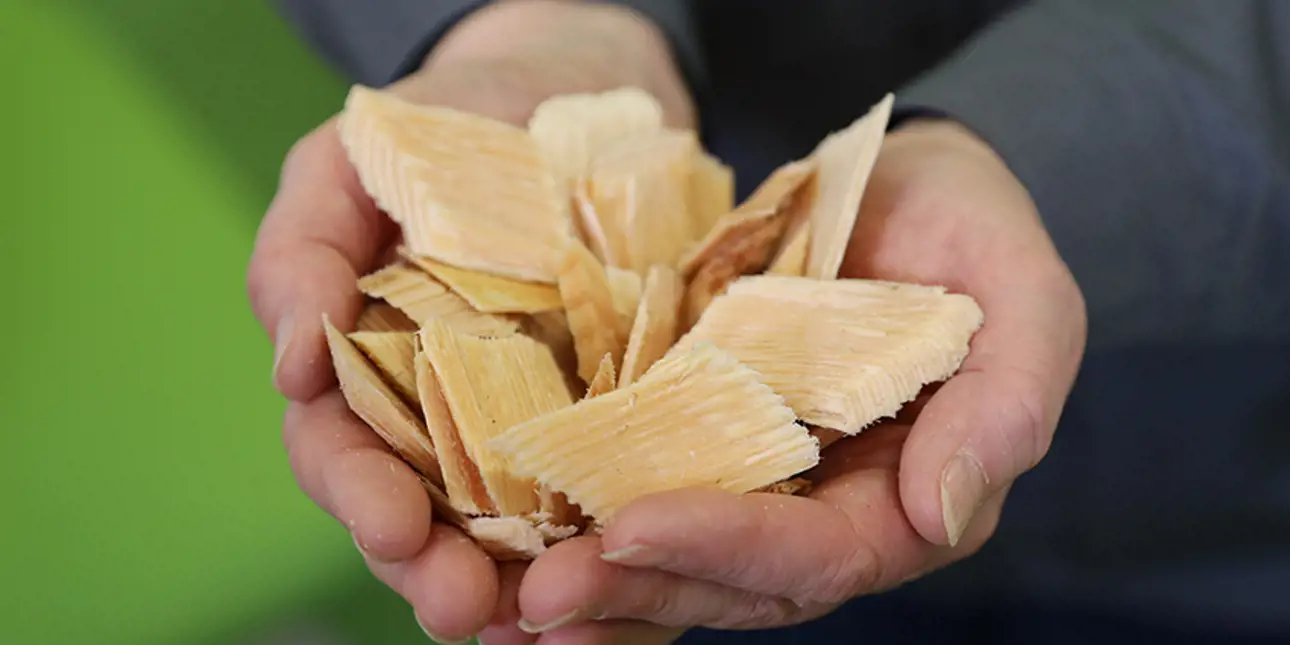
Lifecycle commitment keeps the equipment in optimal condition and ensures the highest chip quality.
Long-term cooperation leads to best results
In addition to state-of-the-art technology, Valmet offers a wide range of services to boost mill performance. Services include wear part management, inspections, performance tracking, operator training, and modernization planning. For example, a full audit of the wood handling line is recommended at least once a year. Audits identify wear, misalignment, bottlenecks, and improvement opportunities, helping customers maintain high chip quality.
The best results are achieved through long-term cooperation. Valmet’s service agreements provide a structured way to improve chip quality and overall mill efficiency through wear and spare parts as well as maintenance management, and process optimization. A service agreement is always tailored to customer needs.

Regular inspections and maintenance are essential for stable operation and chip quality.
“Chip Quality Agreement (ChipQ) is a specialized service agreement focusing specifically on chip quality improvement. The primary target of the agreement is to optimize the process and minimize wood losses. The pricing is performance-based, dividing the risk between Valmet and the customer,” explains Minna Vepsä, Product Sales Manager, Pulp drying, Baling, Wood & Biomass Handling, at Valmet.
“These agreements help mills shift from reactive maintenance to proactive lifecycle management, immediately improving chip quality and reducing overall costs. With current raw material prices, even a half a percent saving in wood consumption – something easily achievable with our support – leads to significant savings at the mill,” Minna Vepsä says.

Minna Vepsä, Product Sales Manager for Wood Handling
These agreements shift mills from reactive maintenance to proactive lifecycle management. Even a half-percent saving in wood consumption leads to significant savings at the mill.
Looking ahead: data driven lifecycle management
Online measurement and digital tools play a growing role in chip quality control and lifecycle optimization. They support the entire equipment lifecycle by enabling predictive maintenance and data driven decision making.
“Measuring chip quality is important, and today there are excellent digital tools to handle it. Tools don’t automatically fix things, but they help mills understand variation in real time and act on it. It’s the fastest way to reduce costs and stabilize the entire process,” notes Minna Vepsä.
In addition to digital tools, automation also plays an important role in stabilizing the process and preventing chip quality deviations. Valmet offers solutions for online chip-moisture measurement, condition monitoring, and chipper diagnostics.
By monitoring vibration, load, and mechanical behavior, mills can detect wear early and act before it leads to serious damage.
“Parameters such as track vibration, motor load and mechanical behavior can be monitored automatically. If the system detects abnormal frequencies, it can warn that something is wearing out, allowing maintenance to act accordingly to prevent severe damages,” says Timo Laurila, Automation Business Manager, Pulp Concepts, at Valmet.
To be more competitive, mills are moving towards autonomous operations. At greenfield mills, chippers are equipped with chip analyzers, automatic chip samplers, and chip particle size analyzers by default, giving the operators information about chip quality and chipper condition. The automatically collected data is utilized to optimize chipping and cooking processes.

Digital monitoring enable real-time insight and proactive process optimization.
Proven results at customer mills
Over the years, Valmet has delivered hundreds of solutions to customers worldwide. Read the customer success stories below and contact us to learn more about our offering. Let’s succeed together!

Interested in taking chip quality seriously?
Valmet provides tailored and flexible services and upgrade solutions for wood handling throughout the equipment lifecycle. Valmet offers high quality spare parts and production consumables, and its global network of field service experts is available for troubleshooting, maintenance and shutdown services. Service agreements, such as the Valmet Chip Quality Agreement, secure agreed chip quality and ensure the availability of products and resources.
Related articles