
Built to last, built to evolve: How Valmet IQ Machine Vision services keep mills ahead of the curve
For pulp and paper producers, machine vision systems have become mission-critical – catching defects, protecting quality and keeping production running with fewer operators. But technology doesn’t stand still. Cameras age. Servers fall out of security compliance. Spare parts eventually become harder to find. The question for many mills isn’t whether to modernize their vision systems, but how – and how to do it without disrupting production or making a major upfront investment.
That’s where Valmet’s service and upgrade teams come in.
Nowadays, quality is really the priority. Customers understand that they need the system running – and running at its best

More than a camera business
Valmet IQ Machine Vision is designed to give mills continuous, reliable visibility into their production and product quality. But keeping that visibility effective over the long term takes more than the technology itself.

Valmet supports customers throughout the lifecycle of their machine vision systems, from installation and commissioning to training, preventive maintenance, remote and on-site support, as well as targeted upgrades.
Jelínek is quick to point out what sets Valmet’s service approach apart from other suppliers. “There are companies that focus only on cameras. But Valmet also has QCS and, most importantly, we know the process – we build the machines. That gives us expertise in pulp and papermaking overall, not just on the camera side.”
That process knowledge matters when interpreting what the system sees. Machine vision can help mills analyze sheet breaks and paper quality, but understanding why a defect occurs requires knowledge of the process behind it.
“If we know the process and how things are working, we can better help customers analyze what’s going on,” Jelínek says.
From reactive fixes to proactive care
According to Jelínek, who has been with Valmet for almost a decade, the nature of service itself has changed.
“In the past, it was mainly if something stopped working, we went to fix it,” he explains.
Today, remote support lets Valmet’s engineers troubleshoot issues remotely, review shared photos and system information – and resolve many problems without a site visit. For some customers, this can include 24/7 on-call support backed by our service center in Finland.
What is more, mills are increasingly taking a more proactive approach.
“Customers are more interested in keeping the system running and keeping it in good shape,” Jelínek says.
That mindset has pushed mills toward preventive maintenance and regular audits, typically once a year and sometimes more often for customers with extensive service contracts or a larger installed base.
But even without a dedicated site audit, Valmet’s service teams know which equipment a customer has and can plan for when it needs attention.
“We create lifecycle plans, mapping out one, three, five and even seven years ahead. That’s how we know, for example, if the Windows platform is becoming obsolete or if camera resolution is no longer good enough,” he explains.
Cybersecurity moves to the center
Another shift, according to Jelínek, is the growing importance of cybersecurity in machine vision lifecycle management. As operating systems age, mills risk missing critical security patches – a growing concern for plant IT teams.

“A lot of customers care about the Windows setup and the security, so that nothing is obsolete,” Jelínek says.
This has driven a steady interest in server replacements across Valmet’s installed base. Keeping servers and software current is not simply a matter of adding new features. It is essential for maintaining a secure and supportable system.
Better images, better quality control
Another tangible benefit of modernizing machine vision is improved image quality.
“The difference between a photo taken with a 10-year-old camera and one taken last year is huge,” Jelínek says.
The value of that improvement depends on what the mill produces and what its quality requirements are. For more demanding applications, however, higher resolution can make a significant difference.
Hygienic paper is one example.
In one recent upgrade, Valmet replaced an older machine vision system used for hygienic paper production. The customer needed to identify insects in the paper – a critical quality issue because even a single insect could lead to an entire jumbo roll being returned.
With the improved camera technology, the system can now identify and distinguish these defects much more effectively.
“For this particular customer, an employee had to review large numbers of images to look for possible insects, sometimes spending much of the morning going through images from the previous production period. Nowadays, it is just easier for everyone,” Jelínek says.
Proving quality, not just detecting defects
What’s more, these systems are often key to helping customers document product quality. “Some customers cannot sell the paper if they cannot prove the quality,” he notes.
For these mills, keeping machine vision performing effectively is therefore closely connected to their ability to demonstrate compliance with customers’ requirements.
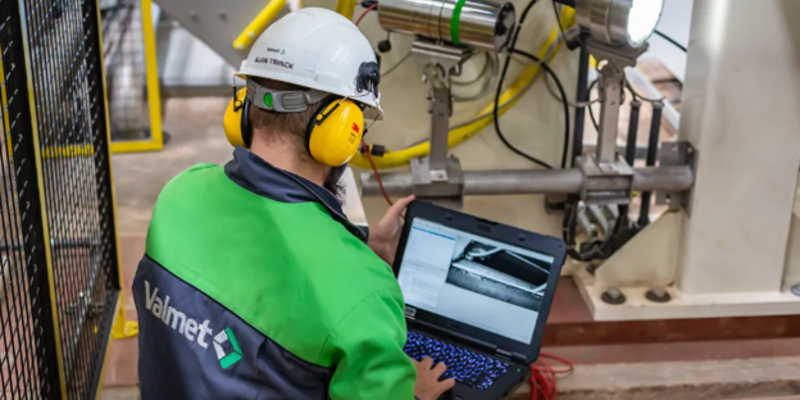
Reducing manual work with smarter inspection
The hygienic-paper example points to another growing challenge for mills: finding and retaining skilled people for manual quality checks.
A modernized machine vision system does more than deliver a sharper picture. By improving defect detection and classification, it reduces the need for manual image review and helps operators focus their attention where it matters most.
This is one of the values of Valmet IQ Machine Vision. The system combines camera technology with image analysis and intelligent classification to turn images into usable quality information.
And the role of advanced analytics is only growing. Valmet is continuing to develop this area, with AI already helping to make defect classification faster and more precise.
AI takes machine vision further
Already today, AI-assisted solutions can analyze hundreds of parameters for each defect, including shape, grayscale or elongation. This makes it easier to build classification rules and tell, for example, whether a mark in the sheet is an insect, a dark spot or something else entirely.
However, Jelínek notes that AI is also finding its way into service and diagnostics. One example is image analysis. “If a camera fails, it can detect a change in the image histogram and point engineers to where they should look more closely when investigating a problem.”
Step by step or all at once?
The question for mills, though, is how to keep up with changing technology and take advantage of new possibilities without making bigger changes than necessary.
Valmet’s approach is built around flexibility. Sometimes, it is enough to simply change LED light panels as they age, replace cameras as components become obsolete or higher resolution becomes necessary or upgrade servers to maintain cybersecurity.
For mills still running Valmet’s older-generation vision systems – some in operation for two decades or more – spare parts availability becomes a critical consideration.
“As long as there are spare parts, we can keep it alive,” Jelínek says.
But when a platform’s components are all approaching the end of their life at the same time, it may be worth considering a more comprehensive renewal.
“Even then, it does not necessarily mean replacing the entire physical installation. We can keep the beams, move new light panels in, replace the cameras – the mechanical structure can stay on the machine,” he adds.
This makes it possible to retain infrastructure that is still fit for purpose while bringing the core technology up to date.
One platform, one screen
Keeping a machine vision system up to date is not only about cameras, servers or image analysis. Upgrades can also extend how the system connects with the wider mill automation environment. Valmet’s machine vision can be integrated with QCS and other Valmet systems, bringing production and quality information together.
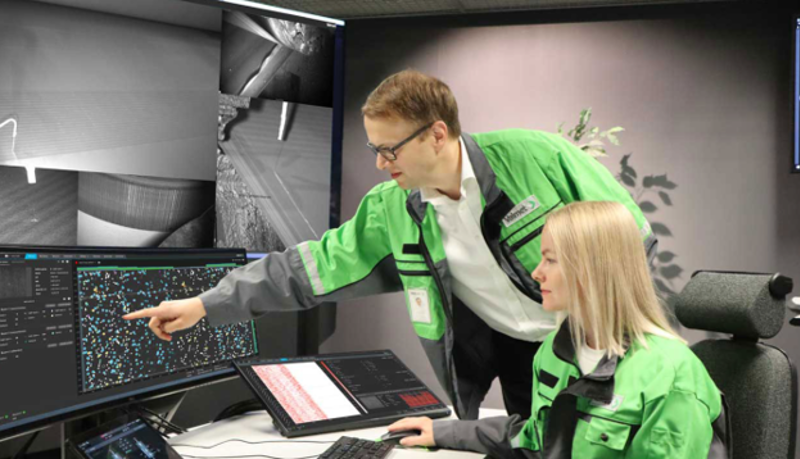
For example, operators can view sheet defects alongside measurements such as basis weight and moisture and use the newer user interface to investigate relationships between process conditions and defects.
“Let’s say we can see that something is coming from a particular pump. We can follow the source, all on one screen,” Jelínek says.
This integration adds another dimension to the lifecycle of a machine vision system.
Planning around production, not against it
But whatever the scope of an upgrade, minimizing disruption is key.
Equipment installed directly on the machine typically needs a machine to be stopped. Mills typically have one major annual shutdown as well as several smaller stops throughout the year. And Valmet’s service teams plan the work around these windows wherever possible.
Good planning can therefore allow a mill to modernize its machine vision system without unnecessary production downtime.
Keeping mills ahead
Whether a mill is replacing a single component or planning a complete system renewal, the objective is the same: to keep its machine vision reliable, secure and ready for the demands of the process.
Supported by lifecycle planning, preventive maintenance, remote assistance and upgrade options, Valmet IQ Machine Vision services help mills get the most value from this crucial technology – today and in the years ahead.

