PSF's challenges: Valmet Perini Technology solutions. How technology and collaboration have supported PSF's growth in the Mexican market across generations.
From the pioneering introduction of embossed tissue in Mexico to a vision of fully integrated production, this is a story of innovation, partnership, and continuous growth.
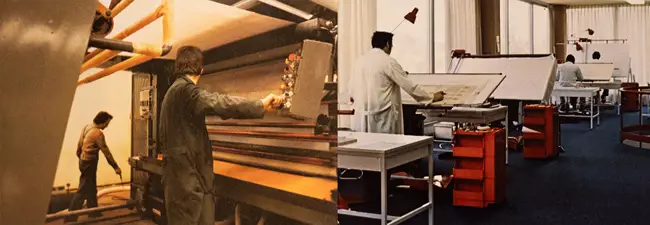
For 60 years, the history of Valmet Perini Technology has been above all a story of people, relationships, and challenges faced together. This is one of those stories.
Some innovations improve the way a product is manufactured. Others change the way an entire market perceives that product.
The story of PSF, Papel San Francisco (PSF), and Perini Technology encompasses both dimensions. Over more than thirty years of collaboration, innovation has not only increased efficiency and productivity, but has also helped redefine product standards in the Mexican market, supporting the company's growth and accompanying it through different generations of technology.
When a new technology opens new possibilities
The relationship between PSF and Valmet Perini Technology began in the early 1990s, when the company was looking for solutions capable of overcoming the limitations of the converting technologies available in the North American (MEXICAN) market at the time.
For PSF, Valmet Perini Converting Technology represented a completely different approach to production. The transition from traditional mandrel winding systems to the surface winding concept opened new opportunities in terms of operational simplicity, reliability and efficiency.
The turning point came in 1994 with the installation of the first Sincro 6.5 line at the Mexicali mill. That machine marked the beginning of a long journey of innovation and growth.
"Sincro technology changed the world" says Mario Garcia, Executive Chairman of PSF.
A statement that perfectly summarizes the impact this innovation had on the company's operations.
"The installation of the first Sincro line allowed PSF to replace three existing converting lines with a single one, generating a level of efficiency that enabled the investment to pay for itself very quickly" continues Mario Garcia.
Pioneers of a new product category in the Mexican Market
However, the impact of Valmet Perini Technology went far beyond production performance.
At the time, embossing in the Mexican market was mainly used for towel products. Toilet tissue, on the other hand, was still characterized by relatively simple and undifferentiated standards. PSF identified an opportunity.
Working closely with Perini specialists, the company began exploring the application of embossing technology to toilet tissue, aiming to improve perceived softness, bulk and visual quality.
What initially appeared to be a simple technical innovation helped change consumer expectations and paved the way for an entirely new product category in the Mexican market.
In the years that followed, the continuous evolution of embossing technologies and pattern designs enabled the company to maintain its ability to differentiate and offer increasingly high-performing and distinctive products.
A partnership built on challenges
Long-term collaborations are often measured by how they perform during the most challenging moments.
One of the first challenges faced jointly was related to the extreme climate conditions of Mexicali, where summer temperatures can exceed 45°C.
The increasing use of electronics on converting equipment required specific solutions to ensure operational continuity and reliability, even in such demanding conditions.
Working together, the two teams developed adaptations and improvements that enabled the lines to operate efficiently despite the extreme environmental conditions.
For PSF, this was one of the moments that transformed the relationship from a traditional supplier-customer interaction into a true technological partnership.
Growing together through generations of technology
PSF's growth clearly reflects the evolution of Perini Converting Technology.
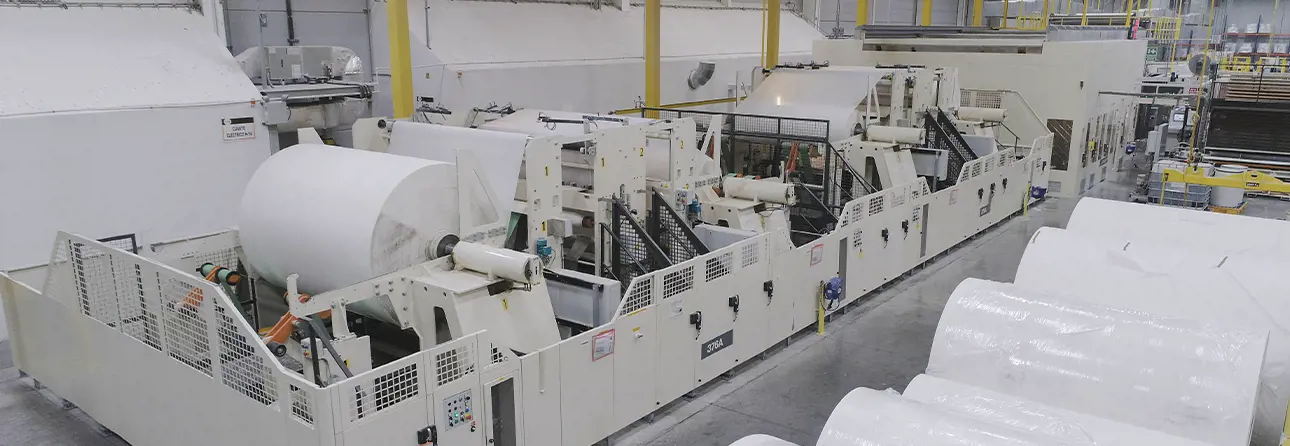
From a single line installed in the 1990s, the company has progressively expanded its machine fleet by embracing every new generation of technology. Today, PSF operates 17 installed Perini converting lines, including 5 Perini Constellation lines.
"Perini Constellation represents the benchmark in terms of efficiency, product consistency and operational flexibility, particularly thanks to the consistent quality of the finished product, the effectiveness of its embossing systems and the ability to manage component changes along the line automatically and quickly."
In a market where differentiation increasingly depends on softness, embossing design and product variety, its ability to perform rapid format and pattern changes represents a significant competitive advantage, Mario Garcia emphasizes.
At the same time, PSF's experience highlights a fundamental principle: innovation does not mean continuously replacing what already exists, but rather building upon the installed base.
Over the years, PSF has upgraded several of its installed Perini lines with new technologies, extending their performance and productivity. Four older Sincro lines, for example, were equipped with new Auto Splice parent reel unwind systems, increasing productivity rates from 70% to 80%, as well as the upgrade of three lines to a state-of-the-art Siemens electrical platform featuring AC main motors, new PLCs, drives, servomotors and HMIs.
For PSF, the ability to modernize existing equipment and integrate it with the latest digital and automation solutions is a strategic element for the future of converting, combining long-term asset value with continuous technological evolution. For this reason, the ability to upgrade existing lines and integrate them with new digital technologies is considered a strategic element for the future of converting.
The future lies in integration
Looking ahead, Mario Garcia sees the next major opportunity in connecting all stages of the production process.
Today, Valmet can provide solutions that cover the entire value chain, from papermaking and converting to packaging and finished product handling.
For an integrated producer such as PSF, the ability to share data and information across the entire production chain represents an important opportunity to increase efficiency and improve responsiveness to market needs.
Reliability, efficiency, innovation
When asked to describe Perini Technology in three words, Mario Garcia has no hesitation:
Reliability. Efficiency. Innovation.
Three concepts that summarize more than thirty years of collaboration and highlight the role technology has played throughout PSF's journey, from introducing embossed toilet tissue to the Mexican market to embracing the latest opportunities offered by digital integration.
As Valmet celebrates 60 years of Perini Technology, PSF's story demonstrates how innovation can create value far beyond the machine itself, helping companies transform their products, grow together with the market and prepare for the challenges of the future.
Excellence drives innovation. In every performance. Since 1966.