A new emission benchmark at Huatai
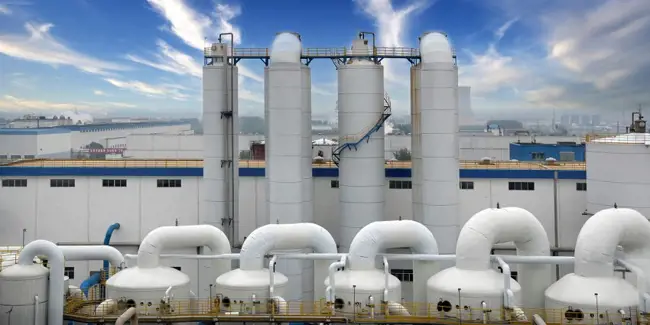
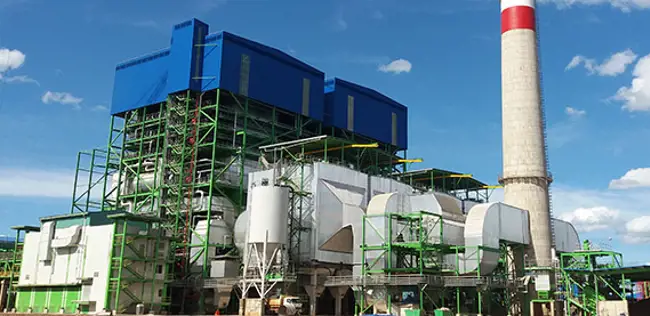
Shandong Huatai Paper Co., Ltd. has achieved exceptional emission performance with its new recovery boiler electrostatic precipitator (ESP). The project, which includes a high-power recovery boiler, is Valmet’s first ESP delivery to China.
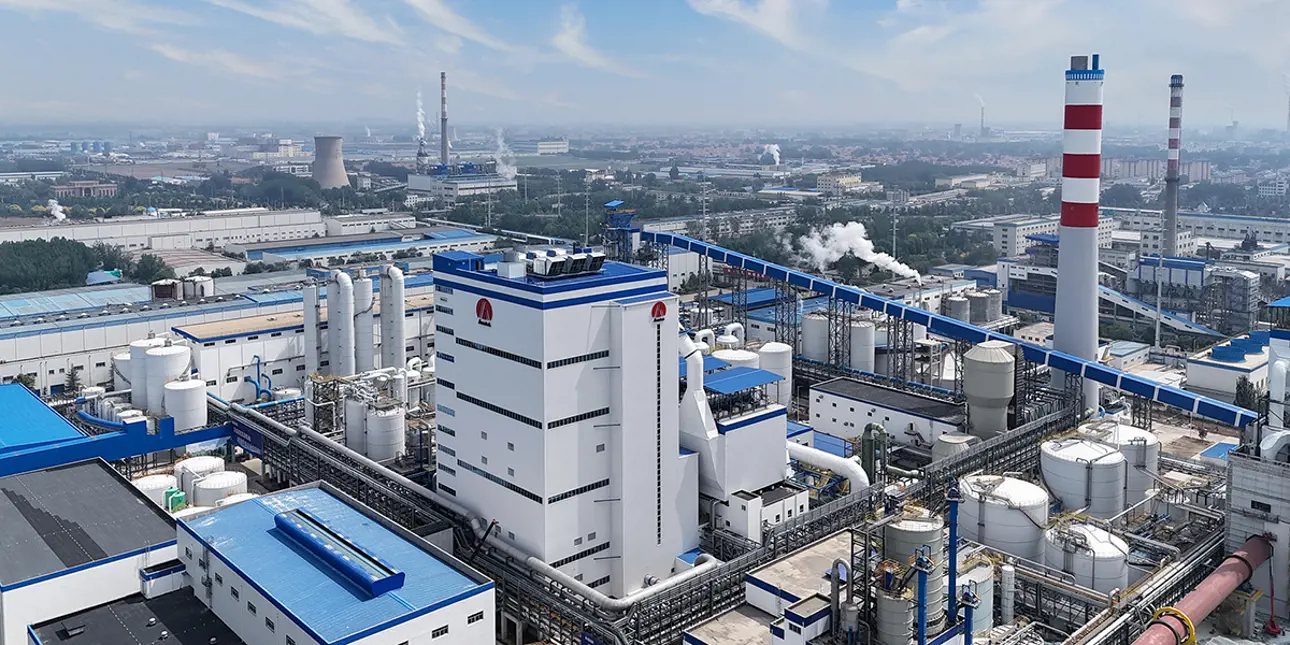
In early 2025, Huatai successfully started up a new 700,000-tonne chemical pulp mill. Its recovery boiler with ESP has set a new benchmark for flue gas emission control in large-scale recovery boilers in the Chinese market. Valmet also delivered other key technologies, including cooking and fiberline systems, a lime kiln, and a lime mud filter.
Meeting stringent requirements
Valmet Recovery Boiler, with a capacity of 3200 tds/d, combines reliable operation, efficient chemical recovery and renewable energy generation. Equipped with advanced vent gas handling, non-condensable gas (NCG) incineration and a high-performance ESP, the boiler achieves near-zero sulfur dioxide (SO₂) emissions and particulate emissions well below China’s 10 mg/Nm³ limit for new recovery boilers.
“This recovery boiler is the next evolution in recovery technology, combining proven design with the latest innovations. By exceeding the customer’s targets we have demonstrated Valmet’s position as a market leader in reliability, technical expertise and performance,” says Markus Puntala, Director, Recovery Boilers and NCG, Pulp Energy and Circularity, Valmet.
Although this was Valmet's first recovery boiler ESP delivery in China, Huatai was confident in its decision thanks to Valmet's global references, advanced control system solutions, and proven expertise in recovery boiler flue gas treatment.
The DCS-controlled ESP adapts to varying flue gas conditions and enables remote commissioning and unattended operation.
"Valmet has 54 years of experience in flue gas treatment technology. The DCS-controlled ESP adapts to varying flue gas conditions and enables remote commissioning and unattended operation while supporting our environmental, production, energy-efficiency, and workforce objectives," says Ma Houyue, Project Manager of Huatai's recovery boiler project.

Ma Houyue, Project Manager at Huatai.
Ensuring smooth project execution
Following startup, the recovery boiler has delivered outstanding operational and environmental performance. Valmet's local and global teams worked closely with Huatai throughout engineering, installation, start-up, and performance testing to ensure smooth project execution.
The ESP was successfully started up on the first attempt and demonstrated outstanding performance during a third-party test in June 2026, recording dust emissions of just 2 mg/Nm³, significantly below the guaranteed limit of 10 mg/Nm³.
Remote access enables Valmet experts in Finland to provide troubleshooting, optimization and technical support without on-site presence.
"During startup, Finnish engineers remotely optimized the parameters after our operating team had finished for the day. The next morning, we found that power consumption had decreased significantly. The optimization efficiency exceeded our expectations," says Ma Houyue.
I would rate our cooperation with Valmet a perfect 10.
"Through this collaboration, we gained a deep appreciation of Valmet's expertise and service capabilities. I would rate our cooperation with Valmet a perfect 10," says Fu Jianwei, Head of Huatai's Recovery Boiler Project.

Fu Jianwei, Head of Recovery Boiler Project at Huatai.
Continuous automated optimization
Valmet ESP combines stable emission performance, high availability, energy efficiency, and automated operation. Once operators set emission targets, the system automatically manages the entire dust removal process.
To maintain low emissions under varying operating conditions, the system continuously optimizes operating parameters. This supports stable dust collection performance, ultra-low emissions, and minimized energy consumption.
The ESP’s redundant design perfectly supports the continuous operation requirements of the recovery boiler.
“The ESP has a redundant design with three chambers and five electric fields in each chamber, enabling maintenance of one chamber without interrupting the production. This perfectly supports the continuous operation requirements of the recovery boiler,” says Qin Jian, Head of Electrical Equipment at Huatai.
"The operational stability, energy-efficiency, and level of automation of the ESP have fully met our expectations for the new production line," concludes Ma Houyue.

Qin Jian, Head of Electrical Equipment at Huatai.
Delivering measurable value
- Reliable production and high recovery boiler availability through a highly redundant design that allows maintenance of one chamber without reducing boiler load.
- Outstanding environmental performance with dust emissions of just 2 mg/Nm³, far below the national Chinese ultra-low emission limit.
- Lower operating costs and improved energy efficiency through advanced DCS control that optimizes ESP performance and minimizes power consumption.
- Safer, simpler operation through automated control and remote optimization, reducing manual intervention and enhancing workplace safety.

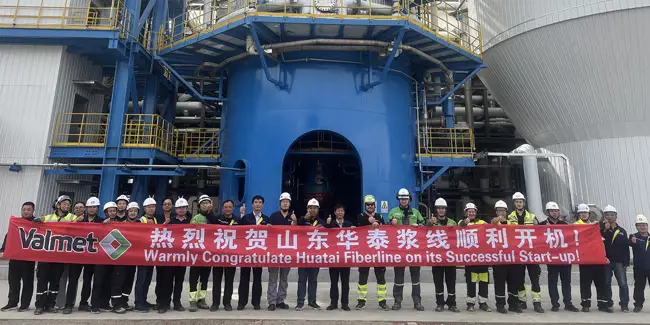
Members of the Huatai and Valmet project teams.
Text: Silvia Xi, Heli Nummela
Photos: Lu Jun
Related articles