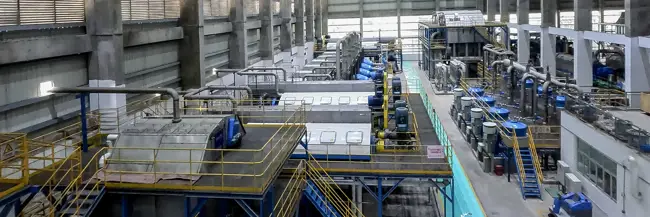
Valmet HT-CTMP Technology
Pulp tailored to end-product needs
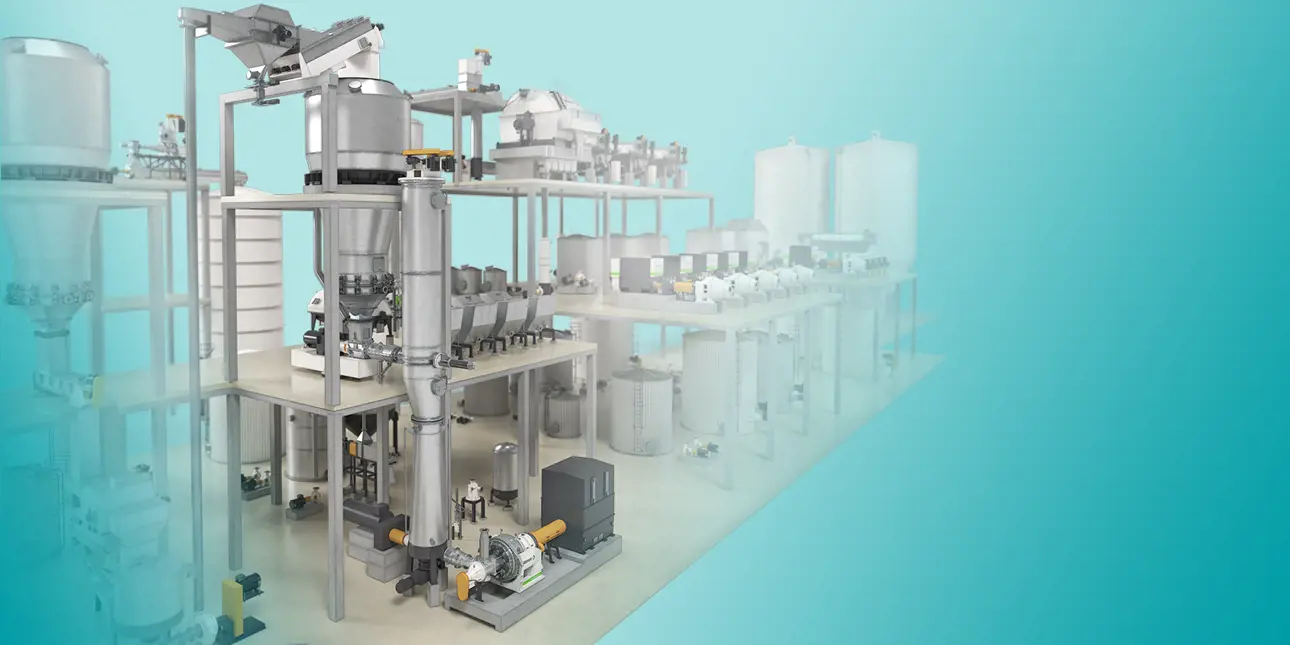
Valmet HT-CTMP system in a mechanical pulping line.
Valmet’s HT-CTMP technology enables pulp producers to produce high-quality mechanical pulp with unmatched process flexibility, all while minimizing energy use.
The process lets producers tailor pulp properties to specific raw materials and end-product requirements, resulting in high-yield pulp optimized for various applications.
Valmet HT-CTMP system
The Valmet HT-CTMP system utilizes PREX technology, where wood chips are compressed in a plug screw feeder before expanding in a pressurized impregnation vessel. This rapid expansion promotes effective and uniform chemical penetration throughout the chip structure. The chips are then heated under pressure to soften the fibers before entering the pressurized refining stage.
What differentiates the Valmet HT-CTMP process is its ability to operate across a significantly wider temperature range than conventional CTMP systems. While traditional CTMP processes typically operate at atmospheric (< 100 °C) or slightly pressurized conditions, the HT-CTMP process can operate up to 180 °C.
A solution for diverse production needs
“A common misconception is that an HT-CTMP system always operates at very high process temperatures. In reality, the key advantage of the technology is its flexibility. By selecting the optimum impregnation temperature and chemical conditions for each application, producers can tailor pulp quality to end-product requirements and unlock opportunities across a wide range of paper and board grades,” says Jesper Nåvik, Senior Process Technology Manager, Mechanical Pulping at Valmet.
With the Valmet HT-CTMP process, mills can optimize fiber development and control key pulp properties. Since the optimal operating conditions depend on the raw material, chemical treatment and target application, the process can be adapted to meet a wide range of performance objectives while maintaining energy-efficient production. This enables producers to serve market segments covering printing & writing, board, tissue, fluff and other specialty grades.

From extreme bulk to strong pulps
One unique and commercially attractive operating window of the HT-CTMP process is in the high-temperature range between 150 and 180 °C. At these elevated temperatures, the lignin-rich fiber matrix becomes significantly softened, promoting efficient fiber separation during refining at reduced specific energy consumption. As a result, pulps with exceptionally high freeness, minimal shive content, less fines and outstanding bulk can be produced. The preserved fiber structure and increased fiber stiffness contribute to bulk levels that are difficult to achieve with conventional CTMP technologies.
“This makes HT-CTMP pulps very attractive for lightweight board and other packaging grades where high bulk is a critical performance attribute. In addition, these pulps can offer unique benefits in selected tissue, fluff, and specialty applications where also absorbency is highly valued,” says Nåvik.
Interest in HT-CTMP is also growing within the printing and writing segment. The combination of efficient chip impregnation, improved chemical utilization, and enhanced fiber softening at elevated temperatures promotes fiber flexibility and bonding potential, facilitating strength development while retaining the yield benefits of mechanical pulping.
The HT-CTMP process enables everything from extreme bulk to strong pulps for printing and writing grades.
Flexibility for a changing fiber landscape
The broad operating window of the HT-CTMP process enables producers to efficiently process a wide range of fiber sources, from softwoods and hardwoods to annual fibers, in a more optimal way. This flexibility becomes increasingly valuable as producers seek to diversify their raw material base.
The ability to operate at higher process temperatures also enables the use of lower-quality raw materials that might otherwise be difficult to process. This is particularly beneficial when using imported wood chips that have undergone long transportation times and may have experienced drying and some degradation in quality.
A highly flexible platform for producing high-yield pulps tailored to specific product requirements.
A proven path to growth
Over the past 10 years, the interest in this technology has been huge. Over 20 systems have been installed worldwide with a design capacity ranging from 300 to over 1500 air dried metric tonnes per day.
In the recent evolution of large-scale CTMP production lines exceeding 1,000 air dried tonnes per day, HT-CTMP technology has also played a pivotal role. By taking advantage of elevated-temperature fiber softening, mills have been able to achieve an attractive combination of high pulp quality, low specific refining energy, and superior production economics.
“Combined with the compact process layout, the technology has proven attractive for both large greenfield projects and modernization of existing CTMP lines” says Nåvik.