Mill-Wide Optimization sets a new standard
It’s never too late to learn new tricks. Mercer Rosenthal, Germany, unlocks new potential by adding Valmet Mill-Wide Optimization to its automation portfolio.
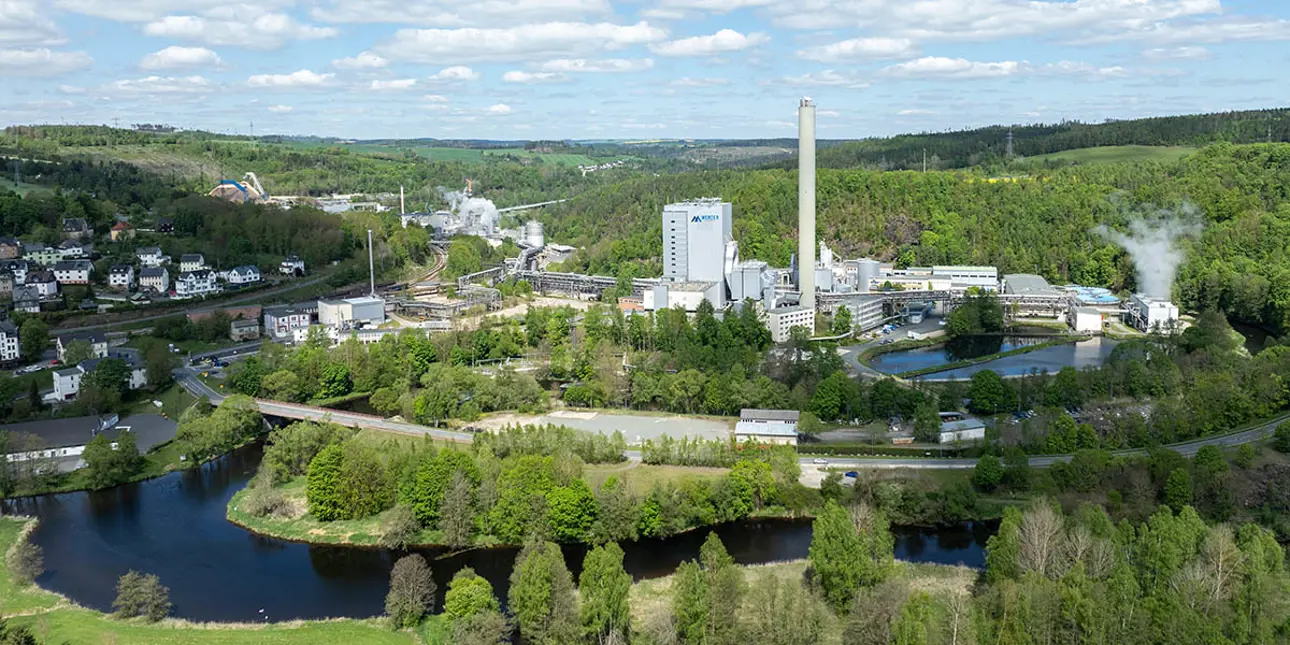
With a history stretching back to 1883, the Mercer Rosenthal mill in Germany has a long and storied past. Today, through determination and methodical improvement, Mercer Rosenthal has become one of the most advanced kraft pulp mills in Central Europe. Valmet is proud to be part of the Mercer Rosenthal success, helping the team consistently improve through automation and expert services.
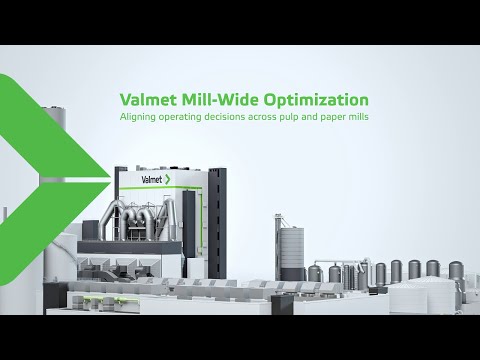
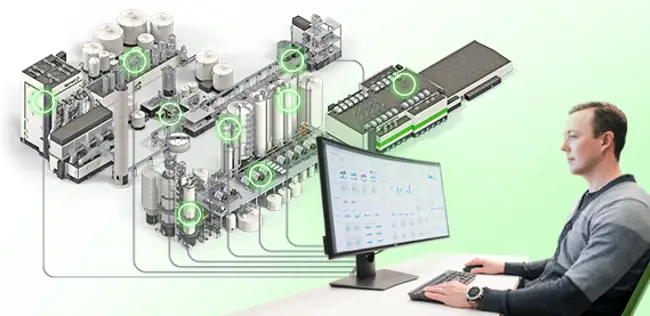
The latest addition is the Valmet Mill-Wide Optimization solution (Valmet MWO). This intelligent advisory tool uses real-time data from Valmet DNA Distributed Control System (DCS) for planning and coordinating the whole mill. Production planners use the tool to set targets, which are then shared online with all departments to adjust their processes.
Trust builds deep roots of success
The setup at Mercer Rosenthal is one of the most advanced implementations of Valmet MWO to date. A strong partnership between Valmet and Mercer, spanning over 25 years, provided a solid foundation for success.
"I can easily sum up our collaboration with one word: trust," says Thomas Ludwig, Automation Manager, Mercer Rosenthal. "Through our long-standing partnership with Valmet, a relationship based on trust has developed between us. We are always looking for trustworthy partners and believe that we have found one in Valmet."
Through our long-standing partnership with Valmet, a relationship based on trust has developed between us. We are always looking for trustworthy partners and believe that we have found one in Valmet.

Thomas Ludwig, Automation Manager, Mercer Rosenthal.
"By combining fast response times with high engineering standards, Valmet supports not only stable production processes, but also long-term operational success," says Markus Foigtmannsberger, Sales and Service Manager, Automation Solutions, Valmet. "Customer satisfaction not as a one-time achievement, but as the result of continuous improvement and a shared commitment to achieve the best possible performance."
"We have always been able to rely on Valmet," adds Andreas Dietzsch, Assistant Fiber Line Manager, Mercer Rosenthal. "Over time, personal contacts have also developed, allowing us to take the shortest path to resolve problems should any arise. I must say I am very satisfied with the collaboration."

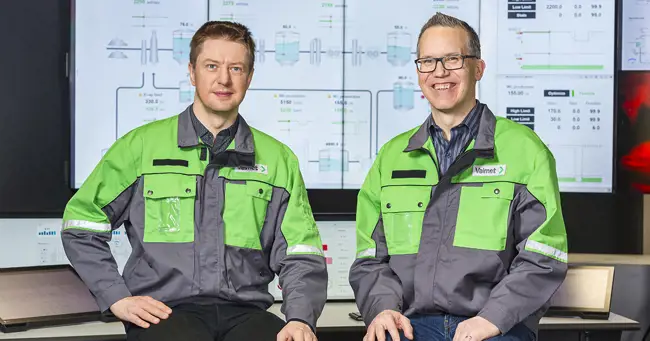
Andreas Dietzsch, Assistant Fiber Line Manager and Martin Stöhr, Assistant Recovery Line Manager at Mercer Rosenthal
"Working together is a natural part of the day-to-day operations thanks to these personal relationships that have developed over the years," says Michael Wagner, Service Engineer, Automation Solutions, Valmet. "Alongside the formal contacts through meetings and reports, for example, the Rosenthal team can email me or can give me a call at any time."
Automation advances over the years
Mercer Rosenthal has steadily built out their automation solution with Valmet. Today they use Valmet DNA, several Advanced Process Controllers (APCs), Valmet Quality Control System (QCS) for drying, numerous analyzers and measurements, as well as Valmet Training Simulators for key departments like the recovery boiler.

"The analyzers provide values that help us implement our optimizations perfectly," notes Dietzsch. "Regular maintenance, carried out by Valmet, ensures that we are always very pleased with the results."
"The Rosenthal mill has advanced, step by step, always according to clear return on investment assessments," notes Foigtmannsberger. "With the addition of Valmet Mill-Wide Optimization, they are staying at the forefront of automation and pushing ever greater levels of efficiency and sustainability."
"With Valmet Mill-Wide Optimization, we are finding the right targets for our production facilities to make our operations even more effective," adds Ludwig.
Tackling bottlenecks and efficiency with optimization
The Valmet Mill-Wide Optimization solution was originally introduced to better manage the liquor inventory at the mill. The optimization project started in early 2024 with a two-week audit, followed by a few months of testing and commissioning. "Through our testing, we found it very useful for inventory management," says Ludwig. "Once we integrated the energy balance of the plant, Valmet MWO became a tool we use daily."
Through our testing, we found it very useful for inventory management. Once we integrated the energy balance of the plant, Valmet MWO became a tool we use daily.

"Before the introduction of Valmet Mill-Wide Optimization, we had to carry out many individual queries from various systems," explains Martin Stöhr, Assistant Recovery Line Manager, Mercer Rosenthal. "This was quite time-consuming. With Valmet MWO, we consolidate all data into a single system. This gives us a very good overview of the overall situation in the mill, which significantly simplifies our regular routines."
The Valmet MWO significantly streamlines downtime periods and provides better planning for individual stops. "This is mainly because Valmet MWO performs many calculations in the background that we would otherwise have to do manually," says Stöhr. "We have been able to reach production capacity that we likely could not have achieved with our previous conventional planning practices."
A three-fold improvement in shutdowns
Shutdowns at mills are standard practice. Alongside breaks to make grade changes, for example, shutdowns provide opportunities for maintenance and upgrades, which in turn help ensure mills avoid the cost of an unexpected shutdown.
"Unplanned outages always cause emissions and can result in additional noise pollution," explains Tobias Albert, Mill Manager, Mercer Rosenthal. "Valmet’s solutions have helped us avoid such disturbances, as well as shorten our planned stops."
Unplanned outages always cause emissions and can result in additional noise pollution. Valmet’s solutions have helped us avoid such disturbances, as well as shorten our planned stops.
The Rosenthal plant sees multiple benefits with each shutdown planned through Valmet MWO. First, the shutdown itself is streamlined. The detailed, mill-wide plans ensure teams know what they need to do for the shutdown, avoiding unnecessary process adjustments.
Second, production running up to the shutdown time is maximized. Department-level shutdowns typically mean mills need to slow down before the break to keep inventories under control. With Valmet MWO, the approach is opposite – production rates can be kept high as long as possible.
Finally, the third benefit is fast ramping up to full production after the shutdown. All departments know where they are in terms of inventory and other key variables. They have targets that align for optimal mill-wide performance, ensuring the mill gets back to full capacity much faster than before.

Ambitious sustainability goals
"We have been able to achieve stability and high availability without any bigger technical disturbances at the mill," reports Albert. "This is essential, because sustainability has become very important. We need stable mill operations with high availability and high yield alongside low chemical consumption without unplanned usage of auxiliary fuels."
"More and more customers are asking about our sustainability targets and the carbon footprint of our pulp," continues Albert. "To meet these requirements, Mercer has set ambitious and aspirational goals through 2030."
Albert is certain digitalization and AI will continue to develop. "Our process data is a big resource," he notes. "We can use that data in an expanding set of models. Tools like the digital twin training environments and Valmet MWO will help us predict more process situations and solve optimization challenges."
Text: Randel Wells
Images & Video: Tileo
The most complex scenario planned with Valmet MWO at Rosenthal so far combined repair shutdowns in the digester, the white liquor plant (WL filter), and the electrostatic precipitators of the recovery boiler. The shutdown was completed with a white liquor loss of only 7% and digester downtime of just 5 hours.
Related articles