Transforming waste into sustainable energy in Vietnam
Thang Long Energy Environment has taken a major step toward modernizing waste management in Vietnam. The Bac Ninh Waste-to-Energy plant transforms municipal solid waste into reliable renewable energy, while meeting strict environmental standards.
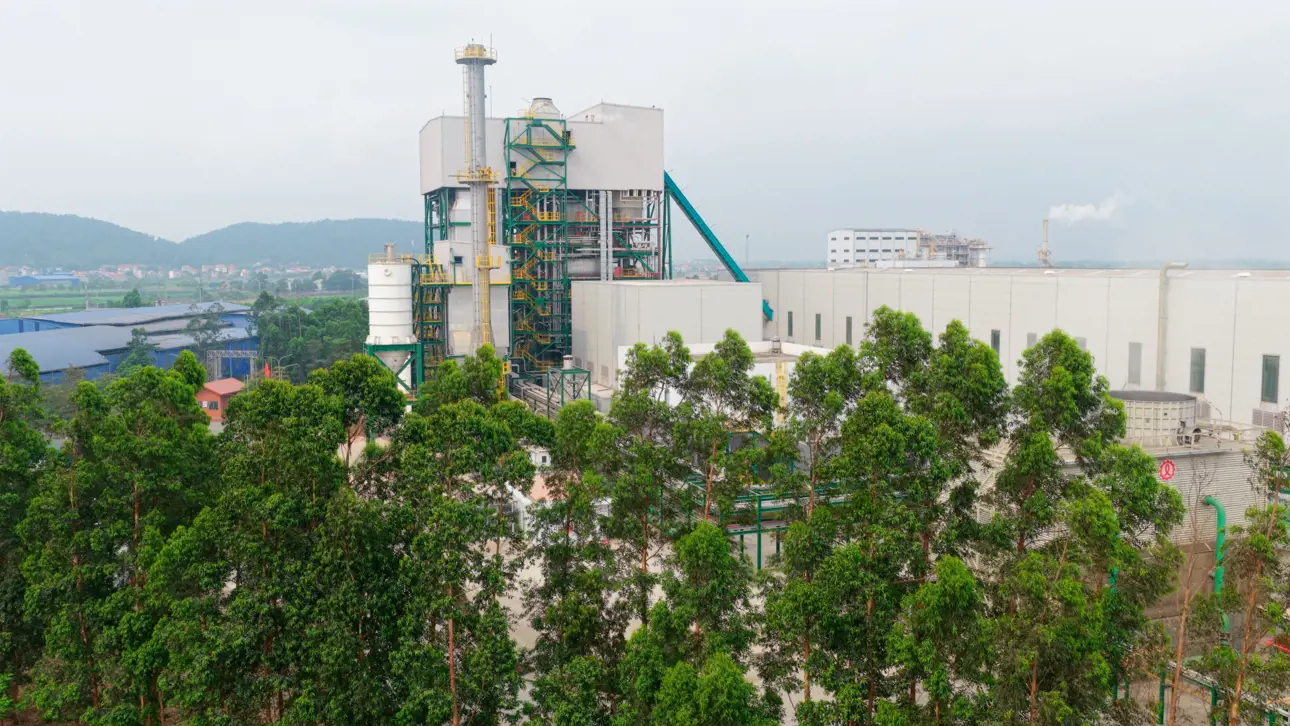
As communities grow, so does the amount of municipal solid waste they generate. In Bac Ninh Province, Vietnam, steadily increasing waste volumes created an urgent need for a cleaner alternative to landfilling and conventional direct incineration.
Thang Long Energy Environment (TLE) responded to this challenge by investing in a waste-to-energy (WtE) plant that converts municipal solid waste from Bac Ninh Province near Hanoi into electricity for Vietnam’s national grid. Powered by Valmet’s circulating fluidized bed boiler, the plant combines efficient energy production with advanced flue gas cleaning and automation.
Responding to urgent local needs
“Strategically, the project marks an important milestone in modernizing Bac Ninh Province’s waste treatment infrastructure. We aimed to invest in a plant with long-term sustainability that not only treated waste while meeting high environmental standards, but also utilized the heat generated during the incineration process to contribute to the development of the circular economy and reduce greenhouse gas emissions as the country’s socioeconomic development continued,” says Anh Tuyen, CEO of TLE.

Anh Tuyen, CEO of TLE says the plant is an important milestone in modernizing the waste treatment infrastructure of Bac Ninh Province, Vietnam.
Why Valmet and CFB technology?
Valmet was selected after a thorough evaluation process based on its extensive global experience of WtE incineration, especially CFB technology.
“This technology stands out for its high power generation efficiency, adaptability to fuels of varying quality, and stringent emission standards. Valmet has also demonstrated a detailed understanding of the actual operating conditions in Vietnam and a strong commitment to long-term partnership with the project owner – an aspect that we value highly,” Anh Tuyen says.
“Our focus was to provide a solution that fits local waste characteristics and supports TLE’s long-term sustainability goals. Seeing the plant operate reliably is a proud achievement for both teams,” says Khoa Nguyen, Sales Manager, Energy, at Valmet.

Valmet’s delivery included circulating fluidized bed (CFB) boiler technology, a flue gas cleaning system, and a DNA Distributed Control System (DCS).
Valmet technology stands out for its power-generation efficiency, adaptability, and strict emission standards.
Smooth execution from design to operation
The project required close cooperation between TLE, the local EPC contractor TTCL Vietnam Corporation Limited (TVC), and Valmet.
“Valmet was involved throughout the basic and detailed engineering phase, and from equipment supply to installation, commissioning, and operator training. Throughout the implementation, Valmet’s experts were regularly present on the construction site, working closely with our technical team and promptly handling any issues that arose,” says Nguyen Huu Thao, Deputy Plant Director.

Nguyen Huu Thao, Deputy Plant Director of TLE, values the good cooperation between TLE, the contractor TVC, and Valmet.
Jussi Orhanen, Director, Strategy, R&D and Business Development, Energy and Circularity, at Valmet, was responsible for planning the project, playing a key role in developing the partnership with TLE and the EPC contractor partner TVC. He says the cooperation with both TLE and TVC was excellent throughout the project. “We worked side by side, solving challenges together and keeping the schedule on track. The successful commercial operation testifies to the strong partnership.”
Thanks to the smooth cooperation, the plant has moved to commercial operation. Since its startup in May 2025, the Bac Ninh WtE plant has continuously improved and has achieved maximum stable operating efficiency, fully meeting the designed waste treatment capacity and generating electricity efficiently.
“CFB boiler technology demonstrates clear advantages in treating complex waste, helping maintain stable combustion and ensuring strict control of environmental parameters. The plant is operating safely, reliably, and in an environmentally friendly manner,” Nguyen Huu Thao says.

The plant was started up in May 2025, rapidly achieving its maximum stable operating efficiency.
Strong foundation for future development
The project shows how advanced technology, committed partnership, and shared sustainability goals can create a lasting impact – the plant is a benchmark for future WtE projects in Vietnam.
The successful commercial operation testifies to the strong partnership.
“We’d like to express our sincere thanks to Valmet for their professional, responsible, and effective cooperation as we were implementing the project. Valmet isn’t only a technology provider but a reliable strategic partner of TLE. We wish to continue cooperation with Valmet in operating and optimizing the plant, as well as in other energy and environmental projects in the future, contributing to Vietnam’s sustainable development,” Nguyen Huu Thao says.
“We’re pleased to continue to support TLE in daily operations and long-term optimization, ensuring the plant remains a cornerstone of sustainable waste management for years to come – and paving the way to further development throughout the country,” says Niina Ollikka, Vice President, Boilers and Gasifier solutions, at Valmet.
We wish to continue cooperation with Valmet, contributing to Vietnam’s sustainable development.
Valmet’s delivery to the TLE waste-to-energy plant
- Valmet CFB Boiler 36 MWth
- Flue gas cleaning system – semi dry (Ca(OH)2 and active carbon)
- Valmet DNA distributed control system
Learn more