Maximizing mineral recovery: Why stability is the foundation of flotation performance

As ore grades continue to decline and mining companies seek higher recovery from increasingly complex deposits, flotation remains one of the most critical and economically significant processes in mineral beneficiation. Modern concentrators process enormous volumes of material every day, yet profitability is ultimately determined by how efficiently valuable minerals can be separated from waste rock. Even small losses in flotation performance can represent significant lost revenue over the life of a mine. For this reason, mining companies continuously seek opportunities to improve process stability, recovery, concentrate quality and operational reliability.
Why flotation performance matters
While flotation technology has evolved significantly over recent decades, the fundamental challenge remains unchanged: creating stable operating conditions that allow valuable mineral particles to attach to air bubbles and report to the concentrate stream. Achieving this objective consistently is far more complex than it may initially appear. Flotation performance depends on the interaction between ore characteristics, grinding efficiency, reagent chemistry, aeration, hydrodynamics, instrumentation and process control. A weakness in any one area can reduce the effectiveness of the entire circuit.
The foundation of mineral recovery
Because flotation determines how effectively valuable minerals are recovered from ore, it is one of the most economically significant stages in a concentrator. After crushing and grinding have liberated valuable minerals from the host rock, flotation becomes the stage where these particles are selectively recovered. The objective sounds deceptively simple, but the physical and chemical interactions occurring within a flotation circuit are highly dynamic. Operators must continuously balance recovery and grade while managing variations in feed characteristics and production targets.
A typical flotation circuit includes rougher, scavenger and cleaner stages, each designed to balance recovery and concentrate grade. Instability in any part of the circuit can quickly propagate through downstream cells, reducing selectivity, increasing circulating loads and ultimately affecting overall plant performance. Consequently, flotation should not be viewed as a collection of individual cells but rather as an integrated process requiring coordinated control and stable operating conditions.

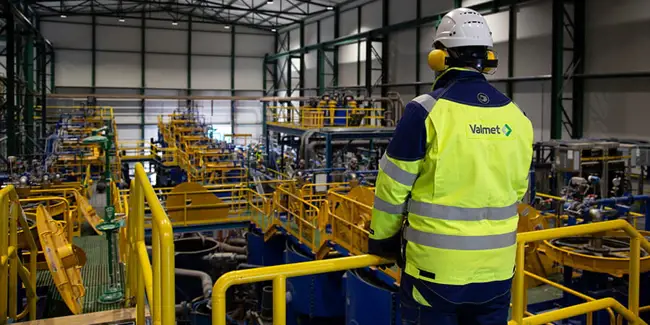
A typical flotation circuit consists of multiple interconnected stages designed to balance recovery and concentrate grade. Maintaining stable operating conditions throughout the circuit is essential for maximizing overall plant performance.
The science behind flotation performance
Successful flotation depends on several simultaneous mechanisms. Mineral particles must first be liberated to an appropriate size range. Reagents then modify particle surfaces to create hydrophobic properties that promote attachment to air bubbles. Aeration systems generate bubbles that collide with particles, and a stable froth layer subsequently transports the mineralized bubbles to the concentrate launder.
Every step is sensitive to change. Excessively coarse particles may not remain attached to bubbles, while particles that are too fine may create entrainment issues. Changes in pH, reagent dosage or water chemistry can alter flotation kinetics. Variations in air flow may influence bubble size distribution and froth stability. For this reason, process stability is often a stronger predictor of flotation success than peak operating performance during ideal conditions.

Efficient particle-bubble attachment and stable froth formation are fundamental requirements for successful flotation performance.
Different flotation technologies, different control challenges
Although the fundamental principles of flotation remain the same, different flotation technologies create different operational and control challenges. Understanding these differences is essential for selecting the right flow control strategy and maintaining stable process conditions.
Conventional flotation cells: Small pressure differences, big control challenges
Conventional mechanical flotation cells remain the most widely used flotation technology across the mining industry. These cells typically operate with relatively small level differences between adjacent stages. Although this configuration is effective from a process perspective, it creates unique flow control challenges.
Because flotation cells often operate with limited available head pressure, the installed performance of a level control valve can be strongly influenced by piping losses, inlet conditions and flow velocity effects. These factors must be considered carefully during valve sizing and selection. If the complete hydraulic system is not considered, stable level control can be difficult to achieve, leading to froth instability and process variability. Because flotation performance is highly sensitive to level fluctuations, accurate and repeatable level control is essential for maintaining both recovery and concentrate quality.
Column flotation: Different hydraulics, different challenges
Flotation columns operate according to many of the same metallurgical principles as conventional cells but present a different hydraulic environment. The greater height of a column typically provides higher inlet pressure to downstream control equipment. While this additional pressure can offer advantages, it also introduces the potential for valve cavitation if sufficient downstream backpressure is not maintained.
Column flotation therefore requires careful consideration of the entire discharge system. Piping arrangements, barometric legs and downstream restrictions may be necessary to maintain suitable operating conditions. Failure to address these factors can lead to premature equipment wear, reduced controllability and unexpected maintenance requirements.
Flash flotation: Rapid recovery demands rapid response
Flash flotation applications are often installed within grinding circuits to recover liberated minerals as early as possible. Because retention times are short and process conditions can change rapidly, flash flotation places particularly high demands on measurement and control systems.
In these applications, process disturbances can quickly affect recovery performance. Operators therefore benefit from equipment capable of responding accurately and consistently to changing conditions. Any unnecessary delay, hysteresis or instability in the control loop may be reflected directly in metallurgical performance.
Building a stable flotation process
Why valve sizing deserves more attention
Many flotation optimization projects focus on chemistry, instrumentation or automation, yet valve sizing remains one of the most overlooked contributors to process stability. In practice, an incorrectly sized valve can limit the performance of even the most sophisticated control strategy.
Undersized valves may operate close to their maximum capacity, reducing controllability and limiting process flexibility. Oversized valves can create excessive sensitivity, causing unstable control and oscillation. The challenge becomes even greater in flotation duty because available pressure is often low and slurry properties may vary significantly.
Effective sizing requires a comprehensive understanding of flow rates, operating pressures, slurry density, particle characteristics and piping configuration. Installed conditions frequently differ from design assumptions, which is why application-specific expertise is often essential. Mines that address sizing issues early in a project frequently avoid years of operational challenges and unnecessary maintenance costs.
Wear, reliability and lifecycle thinking
Abrasive slurry service represents one of the harshest environments for flow control equipment. Continuous exposure to solids, changing flow conditions and demanding operating schedules can accelerate wear and affect control performance. As components degrade, the resulting process instability may initially appear to be a flotation problem when the root cause is actually equipment condition.
Leading mining companies increasingly evaluate equipment based on lifecycle value rather than acquisition cost alone. Reliability influences maintenance requirements, production availability and process stability. A robust solution that delivers consistent performance over a long operating period often generates substantially greater value than one selected primarily on capital cost.
The emergence of predictive flotation operations
Digitalization is creating new opportunities to improve flotation performance. Modern diagnostic technologies enable operators to monitor equipment condition while simultaneously improving process visibility. Rather than waiting for failures to occur, maintenance teams can identify trends and intervene proactively.
For flotation processes, this capability is especially valuable because performance losses often develop gradually. Changes in valve response time, actuator behaviour or control accuracy may affect process stability well before operators notice a significant shift in recovery. Diagnostic data therefore provides another tool for achieving more predictable flotation performance.
From stable control to improved recovery
The strongest flotation circuits are not necessarily those running at maximum throughput every hour of every day. Instead, the highest-performing operations are typically those capable of maintaining stable operating conditions despite changes in ore characteristics, production rates and environmental factors. Stability enables operators to optimize reagent strategies, maintain target levels and achieve consistent metallurgical results.
When process variability is reduced, plants frequently benefit from improved recovery, more consistent concentrate quality, reduced reagent consumption and fewer manual interventions. These advantages reinforce the importance of treating flow control and equipment reliability as fundamental contributors to overall flotation performance.
How Valmet’s flow control technology addresses flotation challenges

While flotation performance ultimately depends on the interaction of many process variables, flow control plays a central role in maintaining stable operating conditions. This is where Valmet's expertise in mining, minerals processing and flow control comes into the picture.
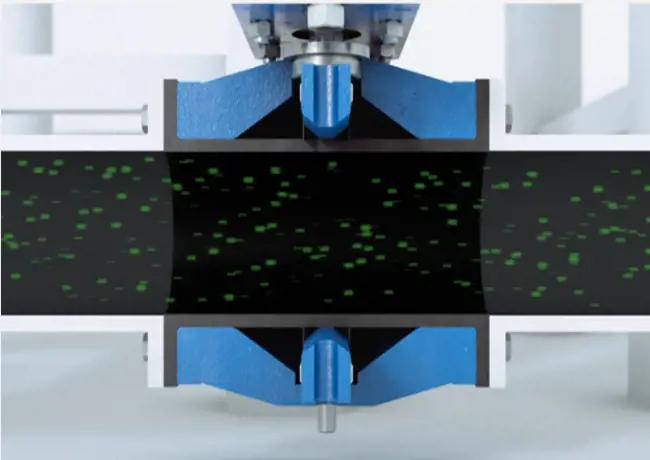
FlowroxTM pinch valves have earned a strong reputation in flotation level control applications thanks to their abrasion resistance, full-bore design and ability to handle demanding slurry duties. The sleeve-based operating principle isolates critical mechanical components from abrasive media, helping to extend service life while maintaining reliable control performance. In flotation circuits where stable level control directly affects froth stability and recovery, durability and repeatability are essential.
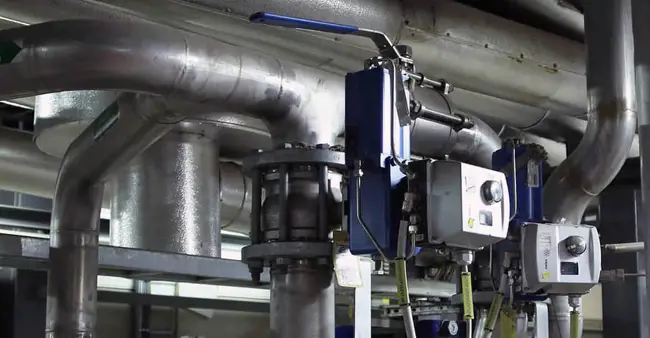
However, mechanical reliability alone is no longer sufficient. Modern concentrators increasingly rely on accurate diagnostics and data-driven maintenance strategies to maximize availability. Intelligent NelesTM valve controllers complement flotation control valves by providing highly accurate positioning together with advanced diagnostic capabilities. Continuous monitoring of valve performance, response times and operating conditions helps operators identify potential issues before they develop into process disturbances or unplanned shutdowns. This supports both improved process stability and predictive maintenance strategies.
When combined, robust slurry control technology and intelligent valve diagnostics provide a powerful foundation for flotation optimization. Stable pulp levels, reduced process variability, improved equipment reliability and enhanced maintenance planning all contribute to more consistent metallurgical performance.
Beyond equipment, successful flotation operations also depend on access to application expertise and lifecycle support. Through local service organizations, shutdown support, condition monitoring, spare parts expertise and Resident Engineer services, Valmet helps customers translate equipment performance into long-term operational value. By combining Flowrox control valves, Neles valve controllers, process expertise and dedicated service support, mining companies can improve flotation reliability, reduce maintenance uncertainty and maximize recovery throughout the life of the operation.
Read more