At the customer site: how Valmet’s Resident Engineer supports reliability at Terrafame
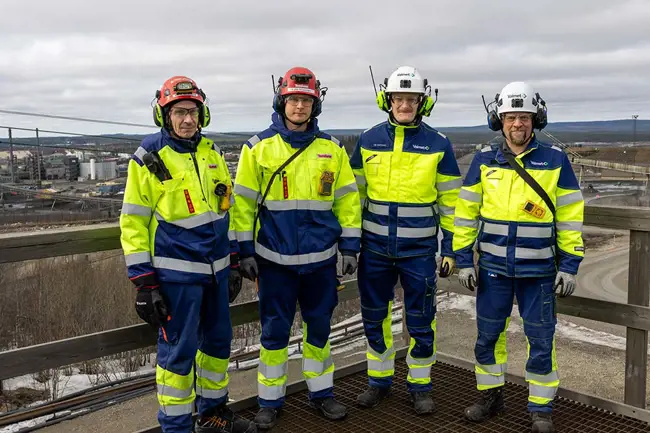
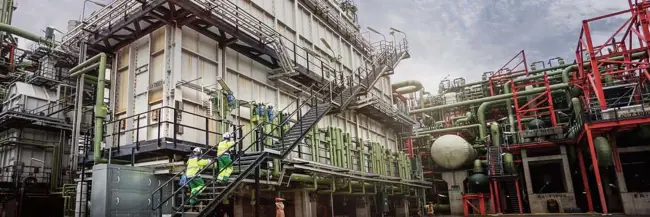
In the demanding process environment of Terrafame’s integrated mine and battery chemicals production site in Sotkamo, Finland, reliable flow control is essential for stable production, predictable maintenance and long equipment lifecycles. As one of Europe’s largest producers of battery chemicals and multi-metals, Terrafame operates a tightly connected production chain where mining, bioleaching, metals recovery and battery chemicals production all depend on high availability and process stability. For Valmet Resident Engineer Pertti Puurunen, supporting that reliability means being close to the customer, understanding the site in detail and helping turn equipment data and maintenance plans into practical actions.

A versatile role close to daily operations
The work of a resident engineer is highly varied. At Terrafame site, the resident engineer’s responsibility is shutdown planning and management. This includes reviewing shutdown work lists together with the customer, identifying the required spare parts, coordinating workers and equipment, and planning schedules so maintenance activities can be carried out safely and efficiently during planned stops.
But the role extends far beyond shutdowns. Pertti also supports condition monitoring, reviews diagnostic findings with the customer and carries out hands-on maintenance work when needed, such as servicing and replacing positioners, calibrating devices and replacing valves. In practice, the resident engineer acts as a site manager, technical expert and link between the customer and Valmet’s local service organization. “The job of a resident engineer, or site manager, is very versatile. The main focus is on planning and managing shutdowns, but there is also a lot more involved, from utilizing condition monitoring data to carrying out maintenance work on-site,” says Pertti Puurunen, Resident engineer at Valmet Flow Control.
Demanding conditions put valves to the test
Terrafame’s processes set exceptional requirements for flow control equipment. The circulating process solution can be highly abrasive, contain a high amount of solids and have a very low pH. Especially on the mining side, the combination of solids and acidic conditions creates a challenging environment for valves, pumps and field devices.
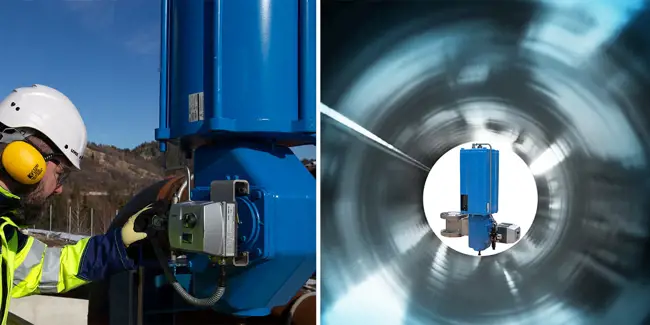
Because of these conditions, the right material choices and valve types are critical. Over the years, Terrafame and Valmet have tested different solutions in real process conditions and identified equipment that can withstand demanding applications. NelesTM and FlowroxTM products are particularly well suited to Terrafame’s environment because of their durability, reliability and proven performance in harsh service.
The site has more than 2,000 Neles valves in use, particularly in critical control and shut-off applications, and more than 900 Flowrox pinch valves in demanding slurry applications. Together, these solutions support high availability, predictive maintenance and reliable operation across the integrated production chain.
Predictive maintenance helps prevent disruptions
One important part at the customer site is using Valmet’s Field Device Manager, which is integrated into the customer’s Valmet DNA automation system. The system enables access to field device data and valve history through the automation network, helping the customer and Valmet identify potential issues before they affect production.
If the data indicates that a valve may be developing a fault, maintenance can be proposed for the next planned shutdown. This supports predictive maintenance: instead of reacting to unexpected disturbances, the customer can plan actions in advance, reduce unnecessary maintenance and focus resources where they create the most value.

A trusted link between Terrafame and Valmet’s Kemi service center
Close cooperation is at the heart of the resident engineer model. Pertti acts as a liaison between Terrafame and Valmet’s Kemi service center, helping coordinate inquiries, spare parts, maintenance support and on-site service work. When needed, he can carry out the repair himself or arrange support from another specialist at the service center.
“I act as a link between Terrafame and the Kemi service center. I handle inquiries and, if needed, either go on-site to repair the equipment myself or arrange for someone else from the service center to come,” Pertti explains.
Because Pertti knows the site, processes and equipment history, support can move forward quickly without the need for repeated onboarding. This familiarity makes shutdown preparation more efficient and helps ensure that actions are aligned with Terrafame’s operational priorities.
Collaboration that keeps developing
Over time, the cooperation between Valmet and Terrafame has become more efficient as the plant, processes and people have become increasingly familiar. The regular rhythm of shutdowns, continuous review of maintenance needs and systematic use of condition monitoring data all support ongoing improvement.
The working environment also matters. Pertti describes Terrafame’s people and partners as professional, solution-oriented and good to work with. Humor and open cooperation make daily collaboration smoother, even when the process conditions and maintenance targets are demanding.
“Cooperation is constantly improving as the plant and processes become more familiar. I enjoy working with customers because it is rewarding,” says Pertti.
Supporting reliability, savings and long-term performance
For Terrafame, the combination of delivered clear benefits. Diligent testing has helped identify the right solutions for challenging applications, while planned maintenance and shutdown preparation support better reliability and cost efficiency. The customer has achieved significant savings and remains satisfied with Valmet’s products, service and cooperation.
At Terrafame, the resident engineer model shows the value of being close to the customer. When technical expertise, process knowledge and local service support come together, maintenance becomes more proactive, shutdowns become easier to manage and production continuity is better protected in one of the most demanding process environments.
Read more