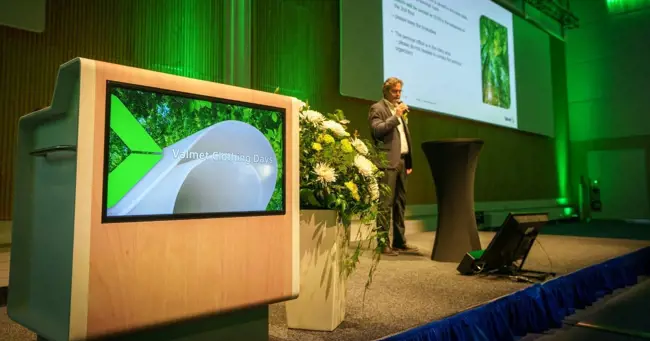
Intensive work for superior performance – this is how press felts are developed at Valmet
At Valmet, press felt development consists of numerous steps including chemical and mechanical testing of raw materials, production trials, in-house laboratory tests, simulations and pilot machine runs, as well as finally running the felts at customer mills. Quite a journey for new products!
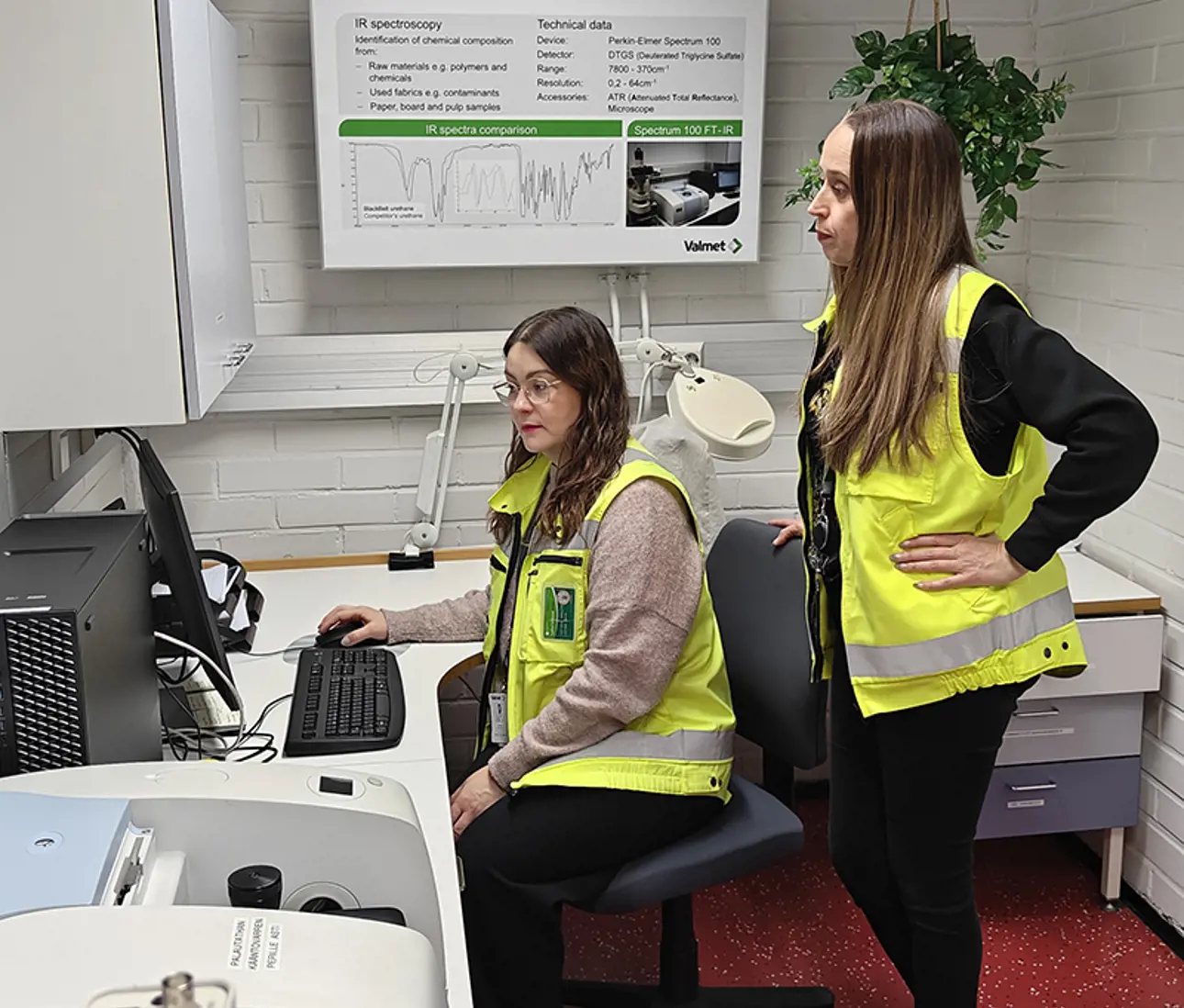
Anette Lampinen and Kati Mikkonen both work at Valmet´s comprehensive in-house laboratory, which is specially designed for analyzing fibers and yarns.
Press felts are exposed to extreme conditions in pulp, board, paper, and tissue production, and our priority is to offer high-performing products with a long lifetime. Our press felts are tailor-made to the specifications of each machine and position, and they are expected to deliver excellent results in terms of lifetime, energy savings, sheet dryness, and reliability. On top of that, we’ve taken the ongoing climate challenge seriously, and are doing our best to lower the carbon footprint of our fabrics.
“With a team of experienced specialists having different backgrounds, we concentrate on developing new high-quality products for our customers and making sure that the existing ones respond to their needs time after time. Our comprehensive in-house laboratory in Tampere, Finland, is specially designed for analyzing fibers and yarns as well as samples of unused and used fabrics,” says Kati Mikkonen, Senior R&D Engineer at Valmet.
Tailored equipment for comprehensive testing
A press felt’s journey begins with thorough testing of raw materials. Yarns and fibers are tested for various properties including strength, elongation, and shrinkage, as well as thermal and chemical resistance.
Once the raw materials are approved, they undergo production tests. This involves weaving and needling the yarns and fibers into a felt and assessing its behavior during the manufacturing process.
“Once finalized, the press felt is tested in our tailored paper machine simulator, allowing us to examine the felt’s behavior under various pressures, speeds, and temperatures. And, for example, a new seamed press felt is always tested for seam strength, marking and seam loop performance. Simulator testing is vital for predicting how the felt will perform in real-world machines,” Kati Mikkonen explains.
Cooperation with the customers is key to success
The final stage involves running the felt at customer mills. Valmet’s service experts monitor the felt’s performance intensively, support the customer in any way, and collect invaluable feedback for possible finetuning.
For example, the recently launched pioneering press felt with bio-based raw material, Valmet Press Felt EMX M Bioneer, was run at several customer mills to double-check its performance in real-life conditions. When it comes to seamed press felts, the installation process including seaming and seaming tools is examined in close cooperation with the customer.
“Thanks to the good customer relationships around the world and the trust we’ve been able to build over the years, many customers are willing to work with us by running a press felt with new or enhanced features on their machines. We really value the cooperation,” says Anette Lampinen, R&D Engineer, Paper Machine Clothing at Valmet.
Thorough analysis leads to data-driven decisions
At the end of their lifetime, Valmet collects samples of used press felts from customer mills for further analysis. Laboratory testing gives us valuable insights about felt’s behavior during use and tools to further optimize its performance and running time.
“Among many other tools, we use microscopes to visually examine the felt, and for seamed felts, especially the seam area is studied for possible wearing,” Anette Lampinen says.
In general, analyzing the press felts’ performance in various conditions before, during and after their use leads to data-driven decisions on future developments and enhancements.
“By involving customers in the testing phase, we can tailor our solutions to their unique requirements and provide them with the best possible press felt performance and added value – whether it is increased production, better runnability or improved environmental performance,” Kati Mikkonen summarizes.

Would you like to hear more?
If you wish to get further information about our solutions for paper machine clothing, fill in the contact form and our experts will contact you shortly.
Contact usRead more